
Homeowner Risk Checklist
Is Your Tree Actually Dangerous, or Just Old?
By Jordan Hale
A tree can look imperfect for years without being unsafe. Dead twigs, surface roots, lichen, and a settled lean are not automatic removal orders.
Risk climbs when a defect lines up with a target — a cracked union over a bedroom, fresh root movement beside the drive, a poplar hanger above the deck. The recent change matters as much as the flaw itself.
Use this checklist to decide whether to watch it, book tree trimming, request an arborist assessment, or arrange tree removal — ideally before storm season.
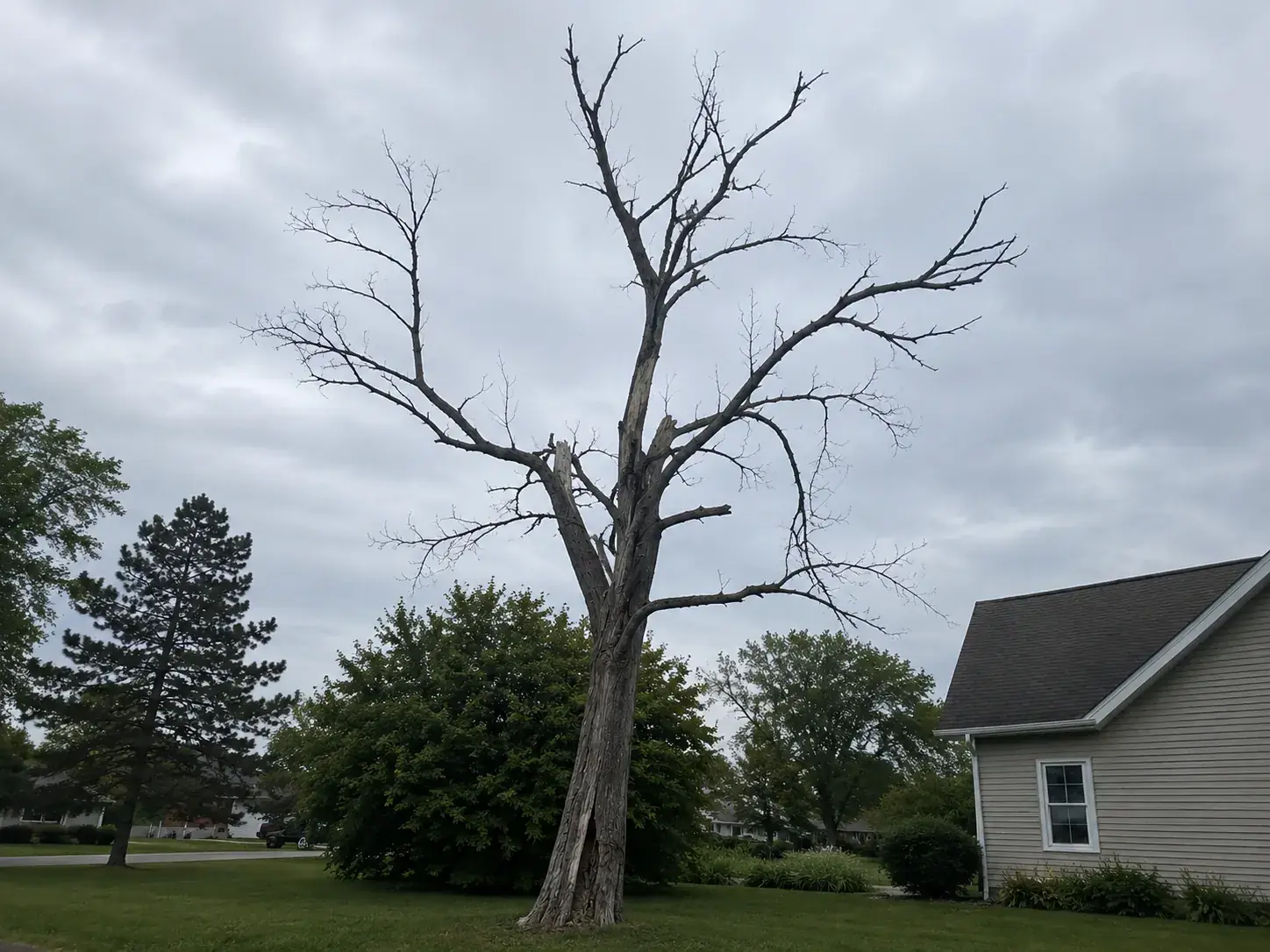
Changes That Deserve a Closer Look
Watch for recent movement, steady decline, and defects pointed at where people and property sit.
The lean is new
A long-settled lean can be fine. Fresh soil cracking, a lifted root plate, or a trunk that shifted after saturated weather calls for prompt evaluation — common when fall-line clay stays wet.
A main union is splitting
Vertical cracks where two big stems meet can mean the canopy is separating under load. Included bark and repeated movement make it worse — cabling or reduction often helps before it tears.
Big limbs are dying back
One dead twig is nothing; several dead scaffold limbs or a thinning top can point to root stress, decay, or structural failure. Pruning may cut the immediate risk while the cause is assessed.
Decay is in load-bearing wood
Cavities aren't always fatal, but soft wood, fungal conks, spreading cracks, or a hollow base deserve an arborist review.
Wind or ice left suspended limbs
Twisted hangers and cracked tops can drop without warning. Keep people clear and call for emergency tree service when the zone can't be secured.
The tree outgrew its spot
Healthy trees still conflict with foundations, service lines, and tight historic lots. Reduction can create clearance; removal comes up only when the conflict can't be managed safely.
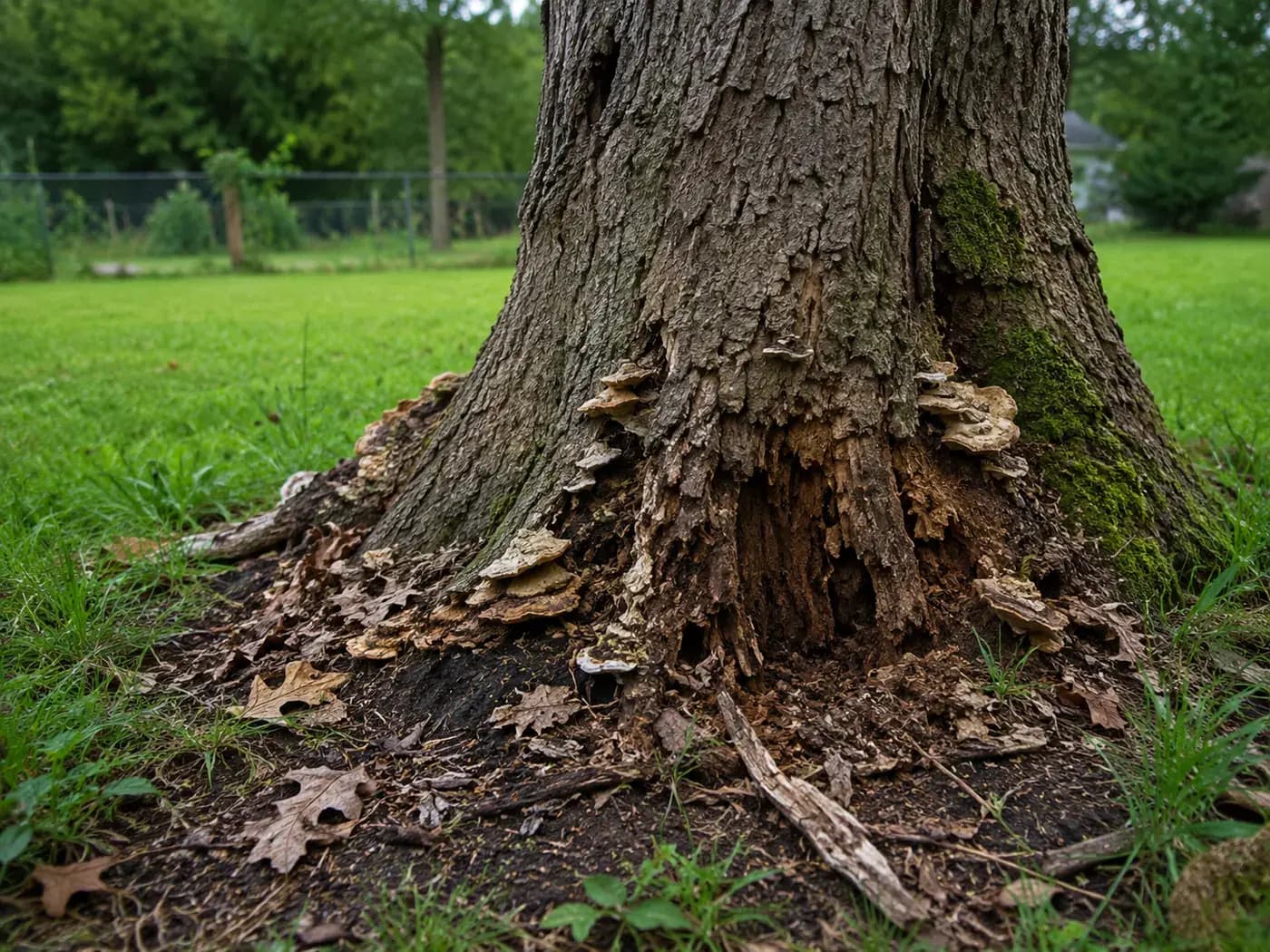
Why a Photo Can't Tell the Whole Story
Photos are great for triage, but they flatten a lean, hide root movement, and can't show how wood responds to a sounding mallet or probe.
For a borderline tree, an on-site assessment weighs species, soil, wind exposure, targets, and how much sound wood is left around the defect.
The point isn't to sell a removal. It's to find the least disruptive fix that brings the risk back to reasonable — well before the next derecho or ice storm.
What to Do While You Decide
Keep people, cars, and pets out of the possible drop zone. Don't tug on hanging limbs or climb a compromised tree.
Photograph the whole tree, the trunk base, the defect, and what's beneath it. Note when you first saw the change and whether a storm or construction came before it.
If there's active movement, a tree on a structure, or contact with a line, treat it as an emergency. Otherwise, schedule an assessment before the next major system moves through.
Tree Hazard Questions
Does a hollow tree always have to come down?
No. Some hollow trees keep enough sound outer wood to stay stable for years. Location, opening size, species, canopy load, and remaining shell thickness all factor in.
Are leaning trees automatically dangerous?
A stable, old lean is different from new movement. When fall-line clay stays saturated, fresh soil lifting or a lean that grew after a storm deserves prompt attention.
Can pruning or cabling make a risky tree safe?
Often. Removing deadwood, reducing an overextended limb, or cabling a weak union can cut risk a lot. Root failure and severe trunk decay usually can't be fixed that way.
Who do I call if a tree hits a power line?
Stay back and contact Dominion Energy or the appropriate utility first. Don't approach the tree or attempt any cutting until the line is confirmed safe.
Keep reading
Related guides & services
Useful next steps from Richmond TreeWorks across Richmond.
Get a Trained Eye on the Tree
Share clear photos and the changes you've noticed through our Instant Estimate.
We'll help you decide whether it's monitoring, professional pruning, an assessment, or removal.